A PDF That Reads You Back: CVE-2026-39919 Turns Document Thumbnails Into Remote Code Execution
Upload forms are the attack surface people stop looking at
On August 23, researchers at Defiant’s platform Wordfence discovered a critical heap buffer overflow (CVE-2026-39919) in Ghostscript, the PostScript and PDF interpreter. The failure mode is simple to describe and hard to accept: a PDF, uploaded and rendered by your own server, executing code on it.
Ghostscript is boring infrastructure. It renders PDFs as images, generates thumbnails for previews, and compresses embedded images to optimize files. When generating a PDF thumbnail, WordPress can use the PHP Imagick extension to call ImageMagick, which launches Ghostscript. If you run a document portal, some version of that chain is part of the product.
What the exploit actually does
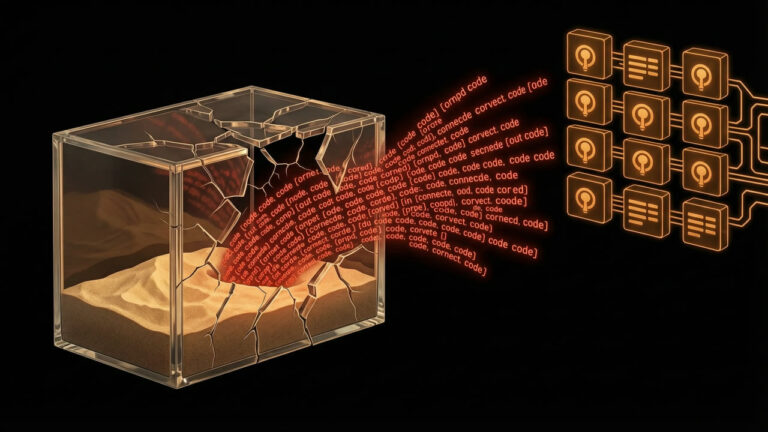
The weapon is a PDF containing a JPEG 2000 image. That image triggers incorrect handling of low-bit-depth samples and mismatched component resolutions inside the interpreter. The Wordfence team, working with their Argus AI-powered research system, developed two exploits for the bug. Both force Ghostscript to write 1,024 bytes into a buffer sized for 256. The overflow corrupts nearby memory, and on a vulnerable WordPress deployment that becomes unauthenticated remote code execution.
The affected surface is bigger
Wordfence focused on WordPress systems, but notes that the flaw affects any online system running Ghostscript 9.21 through 10.07.1, and the payload adapts if an attacker adjusts it to the environment. The researchers tested ten Linux environments, including Debian, Ubuntu, Fedora, Alpine, and AlmaLinux, plus a snapshot of the official WordPress Docker image. Every one of them contained the vulnerable code.
In an African enterprise stack this interpreter hides in ordinary places: loan applications submitted as PDFs, KYC documents previewed in an analyst dashboard, invoices rendered into thumbnails by an overnight batch job. None of those flows check who uploaded the file. They render whatever arrives, and Ghostscript does the rendering with your server’s permissions.
The exploit is real but temperamental, for now
The reason this is not yet on the panic list is how fragile the exploit still is. The two proof-of-concept exploits depend heavily on the target environment. In a lab testbed, the researchers executed the exploits 10,240 times against Linux packages and failed to achieve remote code execution. They did get code execution on a purpose-built test server, after modifying the PDF’s fonts, language settings, font configuration, and one core system library. Today this is a demonstration, not a turnkey weapon.
Demonstrations have a way of maturing. An exploit that fires once in a lab is an exploit someone will make reliable, and public writeups tend to draw scanners within days.
The four conditions that make a WordPress site exploitable
Wordfence lists four prerequisites for successful exploitation in WordPress environments:
- An attacker can upload a PDF, anonymously or through a low-privileged account.
- The site processes that PDF to generate a preview or thumbnail.
- The processing chain reaches Ghostscript, with software and policy settings permitting PDF rendering.
- Ghostscript contains the unpatched vulnerable decoding code.
Stock WordPress does not permit anonymous Media Library uploads, so there is a real barrier. But any application that renders attacker-supplied PDFs through affected Ghostscript code may expose the same flaw, and whether the attacker needs authentication depends on your application rather than on WordPress defaults. Custom portals are where this gets dangerous, because custom portals accept uploads from exactly the anonymous and low-privileged users the core software turns away.
What to do about it
Artifex, the maintainer of Ghostscript, shipped the fix on September 8 in version 10.08.0, and backported patches to older branches, so check the revision details for your specific build. WordPress administrators need to confirm, through their hosting provider, that Ghostscript has been upgraded to version 10.08.0 or later. Ask the question in writing and get the answer on record. If you run containers, rebuild and redeploy with an updated base image, because the vulnerable code lives in the image layer, not in your application.
If the upgrade cannot happen this week, two mitigations narrow the path: block PDF uploads to the server, or disable PDF rendering in ImageMagick. Wordfence says it has not seen in-the-wild exploitation of CVE-2026-39919 yet. Once a reliable exploit is public, that sentence stops being true.
What eHawu does with this
CVE-2026-39919 is ultimately a visibility problem. Most teams cannot answer, on demand, which of their servers run Ghostscript, at what version, behind which upload form. eHawu’s network-layer monitoring gives African enterprises that answer: continuous visibility into the services actually reachable on your estate, their versions, and the exposure each one creates. The window that matters is the gap between the writeup and the first scanner. Shut it before the scan starts.
The Thursday security digest
One email a week. The week's threat analyses, CVE breakdowns and infrastructure notes from the eHawu SOC. No noise, no daily spam.